Need furnace repair in Roseville?
Describe what your AC or furnace is doing and request an estimate. A local provider in our network can follow up. Request a callback to check provider availability.
No obligationRequest an estimate today
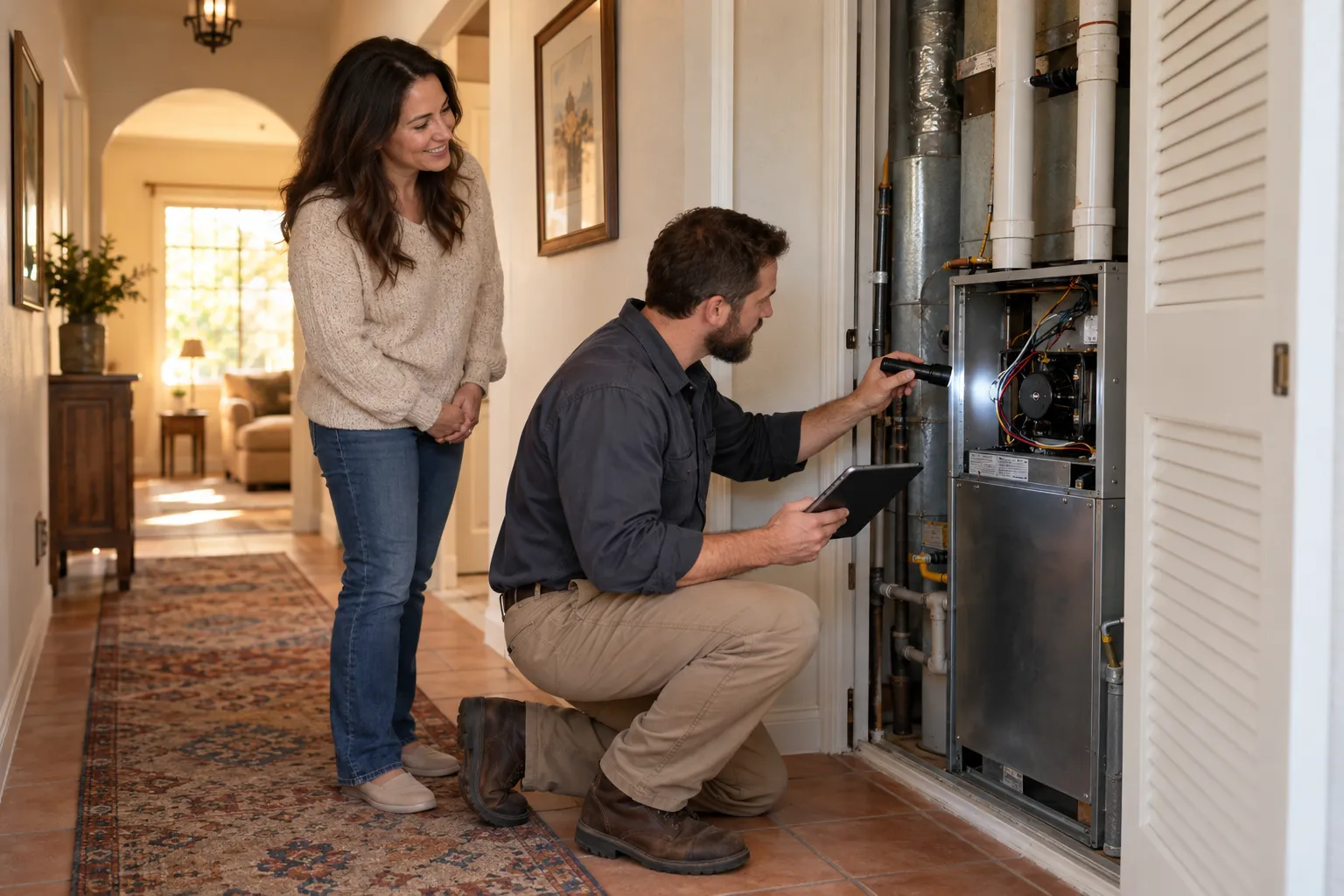
A furnace problem rarely stays the same size. A weak ignition or a clogged filter can turn into a full shutdown within a few cold nights. Resourceshurt Heating & Air is a referral service. You send one request, and we link you with an independent provider in the Roseville area who handles furnace repair.
The provider does the work. Resourceshurt Heating & Air does not. What we do is cut the searching, explain the basics in plain terms, and keep the next step simple. Request an estimate first. Use the phone as backup. Providers set their own schedules, so availability varies. Acting while the problem is small usually means a simpler repair and a shorter wait for heat.
A rotten-egg smell or a hiss near the furnace is a safety issue. Leave the home. Do not touch switches, lighters or phones inside. Contact your gas utility or emergency services from outside.
Come back to this page once the system has been cleared.
Furnace faults move in stages. The stage tells you how fast to act.
Mild coastal weather gives you a little more time. Inland winter nights and storm weeks give you less.
The process is short. You send a request with your symptoms. Resourceshurt Heating & Air links you with an independent local provider. The provider talks through the problem and gives you a written quote before work starts.
These take five minutes and need no tools:
Do not open sealed panels or touch gas lines. If the checks change nothing, stop there.
Look for patterns, not one-off oddities.
Banging, squealing or rattling means a loose or failing part. A loud bang at startup can mean delayed ignition.
A brief dusty smell on the first cold day is common. A burning or musty smell that lingers is not.
The furnace starts, runs briefly and stops. Or one room stays cold while others are fine. Or the bill climbs with no change in habits.
In dry regions the furnace may sit unused for months. Dust burns off, small pests nest in ducts, and parts stiffen. The first hard run of the year is when weak parts fail.
Wildfire smoke seasons add another load. Smoke clogs filters fast. A choked filter strains the blower and can trip the safety switch.
Stucco ranch homes on slabs often put the furnace in a hall closet, garage or attic. Homes on raised foundations may have it in a crawlspace. Older bungalows may use wall or floor furnaces.
Access changes the time and the tools needed. Tell the provider where the unit sits.
The provider checks the thermostat, power, airflow, ignition and safety switches. The aim is to find the root cause, not just the symptom.
You get a written quote with parts and labor listed. Ask questions before you approve.
Many repairs use parts the provider carries. Some parts must be ordered, which can add days. Ask about a timeline.
A damaged furnace can release carbon monoxide. You cannot smell it. Working CO alarms on each level are a basic safeguard.
Headaches, dizziness or nausea while the heat runs are a reason to go outside and seek help. Tell the provider about any alarm that sounded.
Age and repair cost decide it. Many furnaces last 15 to 20 years. If yours is near that range and needs a costly part, replacement deserves a look. A cracked heat exchanger usually ends the debate.
A common rule: if one repair costs close to half the price of a new unit, compare both options. People searching for furnace replacement near me are often at this point.
Ask the provider for both numbers in writing.
A good provider answers in plain words.
Close doors to rooms you are not using. Layer clothing and blankets. Use a space heater only as its label directs, away from fabric and never left running unattended.
Never use an oven, stove or outdoor grill to heat the home.
HVAC service is easiest when the fault is new. Waiting turns a minor fix into a bigger one.
Request a callback to check provider availability, or send the request form and let the match come to you.
The provider tests power, airflow, ignition and safety switches to find the real cause, not just the symptom.
Igniters, sensors, motors and boards are swapped when worn, based on a written quote.
Providers can check the flame, venting and exhaust for signs of unsafe operation.
If the unit is old or damaged, the provider can explain repair and replacement options plainly.
Prices vary by furnace type, part availability and how hard the unit is to reach. These are typical U.S. ranges only. Always ask for a written quote before work starts.
| Item | Typical range | Notes |
|---|---|---|
| Diagnostic visit | $75 – $200 | Often applied toward the repair if you proceed |
| Flame sensor cleaning or swap | $100 – $300 | A common fix for short run times |
| Igniter replacement | $150 – $450 | Price depends on the type of igniter |
| Blower motor or capacitor | $250 – $1,500 | Capacitors are the low end, motors the high |
| Inducer motor or control board | $350 – $1,200 | Varies with brand and parts supply |
| Furnace replacement, installed | $3,500 – $8,000 | Depends on size, efficiency and ductwork |
Tell us what the furnace is doing, where it sits and when the trouble started.
Resourceshurt Heating & Air introduces you to an independent local provider who handles furnace repair.
The provider assesses the problem and gives you a written quote to approve.
The provider does the work, tests the system and explains what was done.
Send one request instead of ringing around. Resourceshurt Heating & Air links you with an independent local provider.
Technical words are explained once, then used simply, so you can follow the quote.
Early action tends to mean simpler repairs and less time in a cold house.
Request an estimate first. The phone is there as backup if you prefer to talk.
Describe what your AC or furnace is doing and request an estimate. A local provider in our network can follow up. Request a callback to check provider availability.
No obligationMost repairs fall between about $150 and $1,500 in the U.S., depending on the part and the unit. A diagnostic visit usually costs less. Ask for a written quote before approving any work.
A dirty filter, a dirty flame sensor or an overheating limit switch are common causes. Check the filter first. If that does not help, a provider can find the cause.
Consider the age and cost. If the furnace is 15 or more years old and the repair is expensive, compare it with replacement. Ask the provider for both quotes in writing.
Describe what your AC or furnace is doing and request an estimate. A local provider in our network can follow up. Request a callback to check provider availability.
No obligation